preferred group travel
15 of 20 survey respondents
TRPN · Social travel platform
TRPN is a responsive travel-discovery product that I helped design and implemented using React, HTML, CSS, and JavaScript.
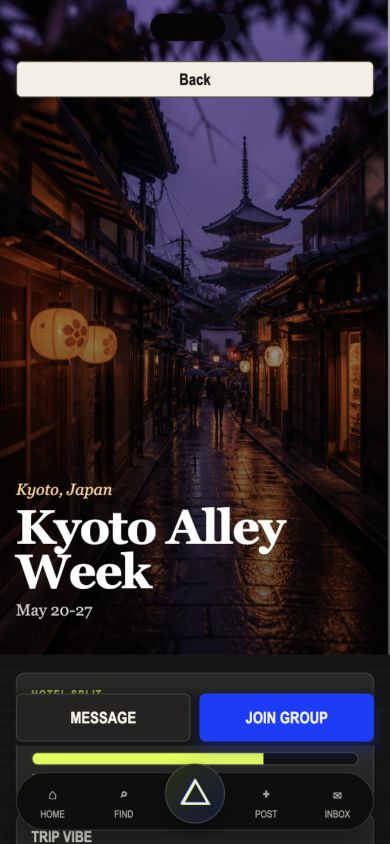
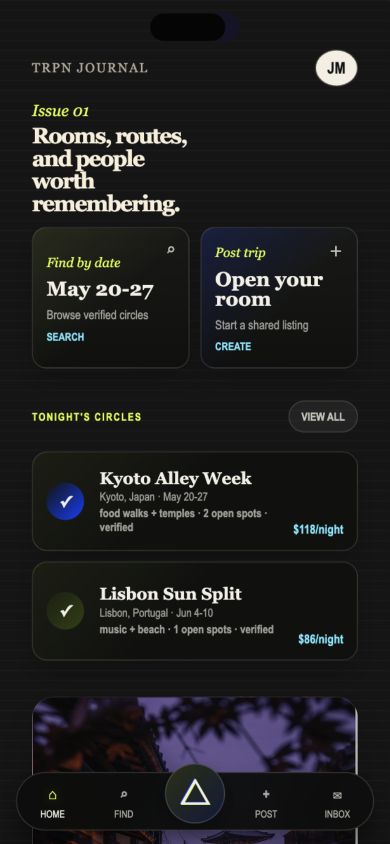
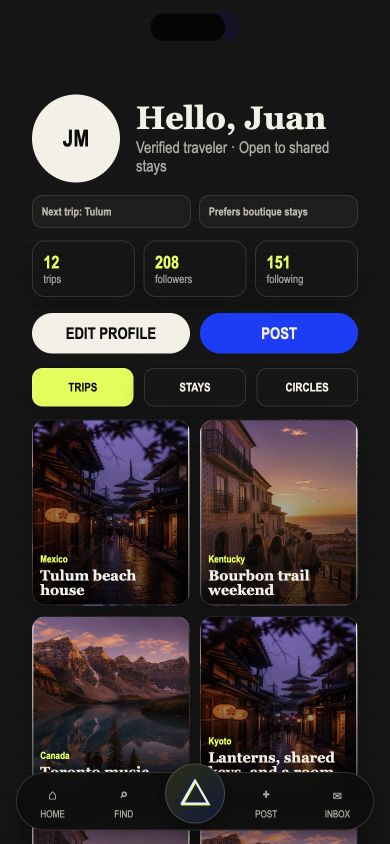
01 · Overview
When someone leaves a group trip, the remaining travelers may need a replacement to preserve the budget. A solo traveler may want the opening, but both sides need to judge safety, compatibility, expectations, and cost before committing.
02 · Research
15 of 20 survey respondents
ratings 1–2 on a five-point scale
open to changing the itinerary
rated at least 3 out of 5
Source: 20-response team survey documented in the TRPN project deck. Percentages are reported only where the underlying chart was available.
Interview synthesis
Interview notes were grouped and dot-voted. Safety, community, and finance recurred most strongly; planning mattered, but participants described themselves as flexible.
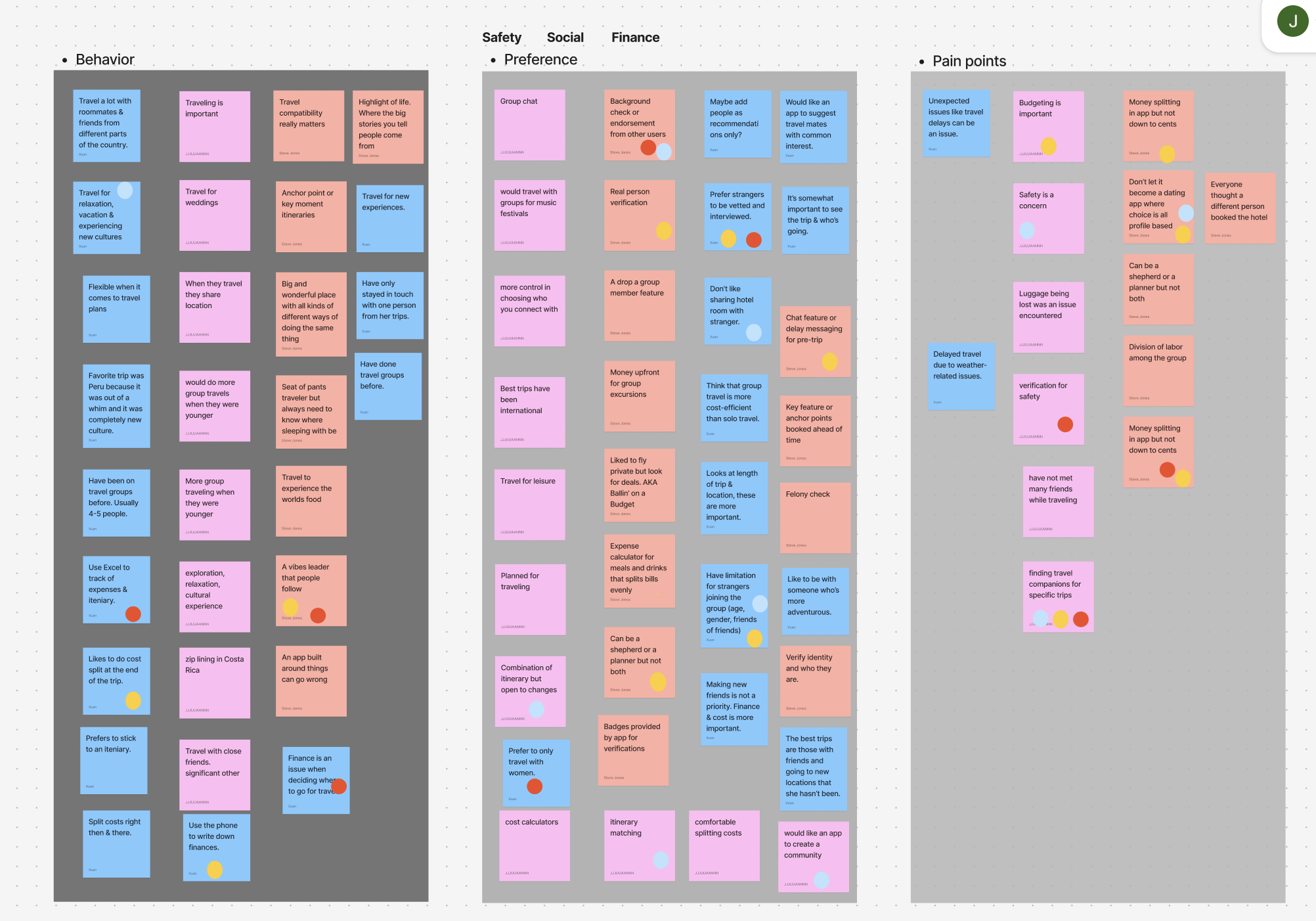
Know that people are real and understand who is in a group before joining.
Find compatible travelers and have a way to talk before money changes hands.
See costs early and make the reason for filling a spot understandable.
Competitive review
03 · Definition
A marketplace centered on price and availability.
Verification, shared context, conversation, and flexibility moved ahead of booking.
Priorities
The MoSCoW exercise put verification, group communication, mutual interests, and core trip details ahead of discounts and secondary social features.
04 · Core journey
Search by date, place, and interests.
Review trip details, travelers, and cost.
Message the group before joining.
Coordinate the itinerary together.
05 · Wireframes & iteration
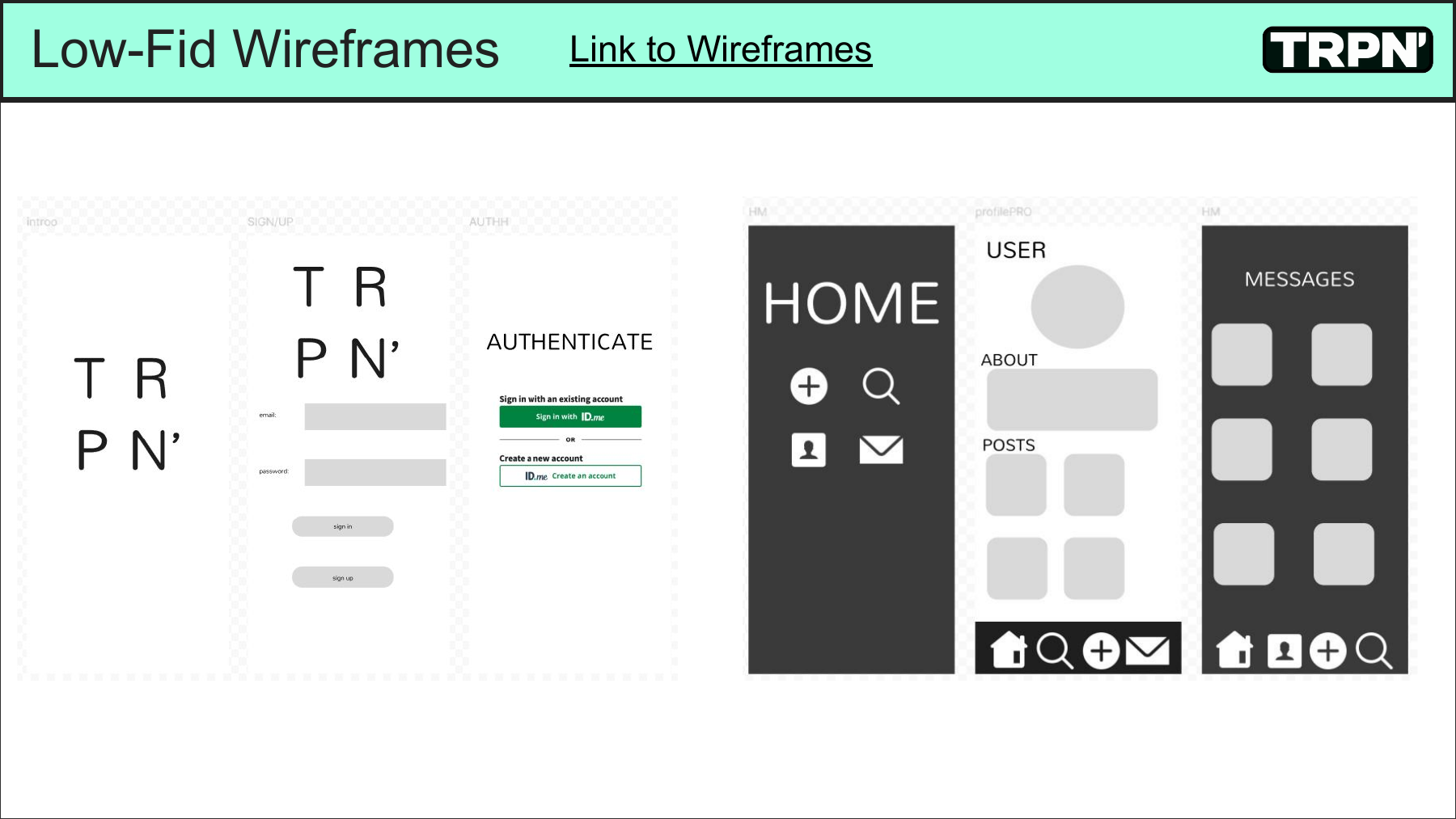
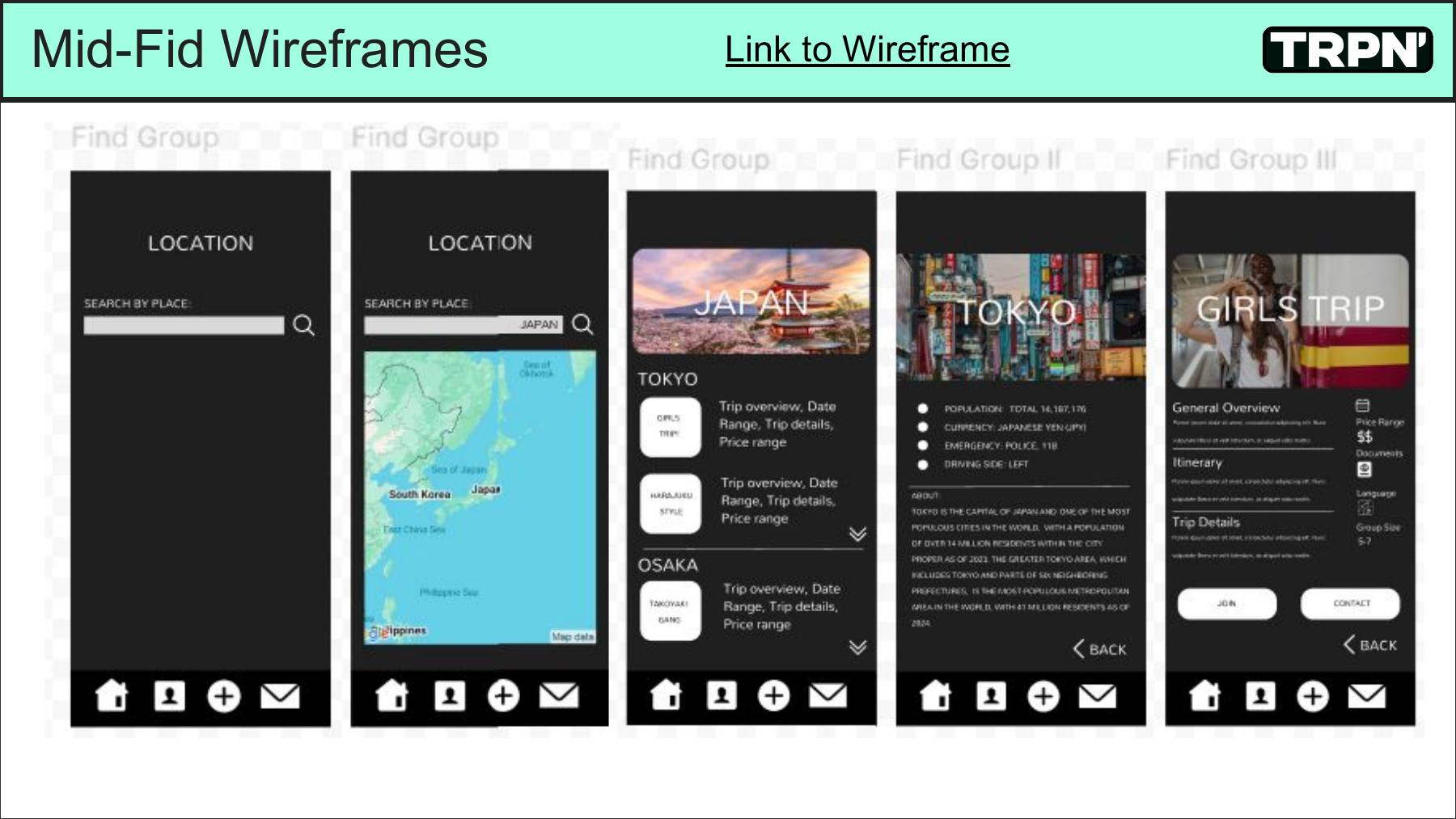
Early wireframes tested breadth across authentication, profiles, search, messages, booking, and trip creation. The next pass tightened hierarchy and connected discovery to evaluation and conversation.
Visual direction
Cinematic imagery and editorial type create aspiration; high-contrast utility colors keep actions visible. The palette and components stay intentionally compact so the work—not a style guide dump—remains central.
Columbus · 8 trips · identity checked
Responsive product experience
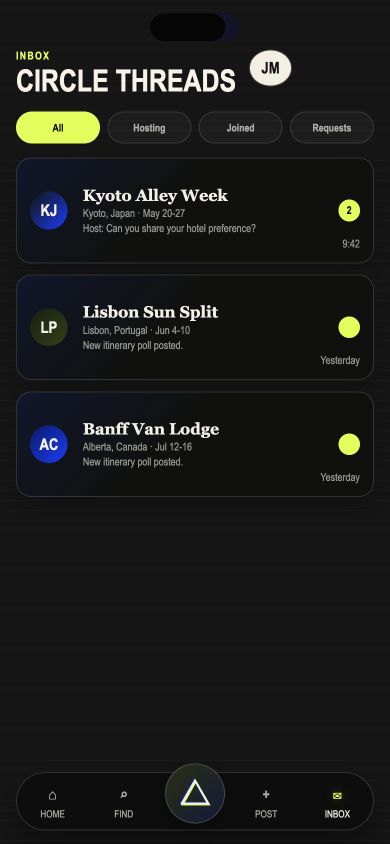
The live React build keeps discovery, trip evaluation, and traveler context clear across screen sizes while staying grounded in the phone experience TRPN was designed around.
06 · Final coded product
Every screen below was captured directly from the deployed React product—not from the presentation deck.
Working interaction
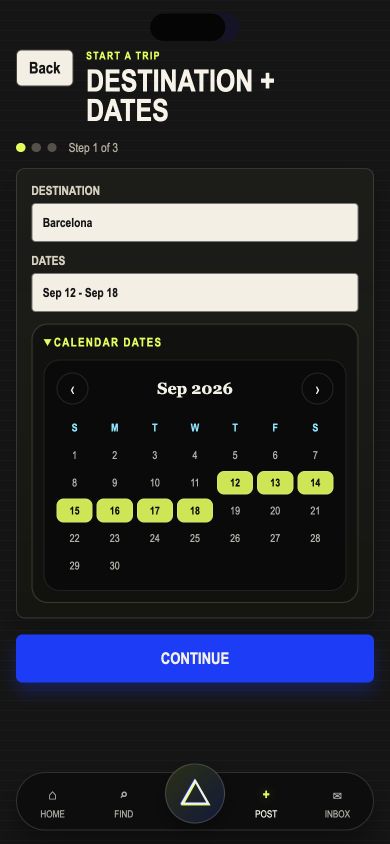
The coded three-step flow begins with destination and dates, then carries the organizer into the information needed to publish a shared stay.
07 · Testing
Participants completed five core tasks across account creation, trip details, joining, creating a trip, and profile exploration. The deck reports successful completion and an intuitive flow, but does not provide a numeric completion rate.
Dietary needs, activity level, pet preferences, and past travel were repeatedly requested.
Next: add structured profile and trip filters.Participants wanted to see who was going and talk—or meet—before paying.
Next: make conversation a step before joining.Group-splitting language and icon-only actions needed clearer labels.
Next: pair icons with direct action copy.08 · Outcome & reflection
The team moved from an open-ended travel idea to a connected prototype. I then helped carry the experience into a responsive React website spanning discovery, trip details, profiles, posting, and messaging.
Trust is an information-order problem. Verification helps, but people also need context, compatibility, and a low-risk way to communicate before commitment. Implementing the experience exposed interaction and content needs that were less visible in static wireframes.
Validate the revised pre-payment conversation flow, test compatibility filters with a broader sample, and measure task completion and confidence with a consistent scale.
Open the working React site ↗